
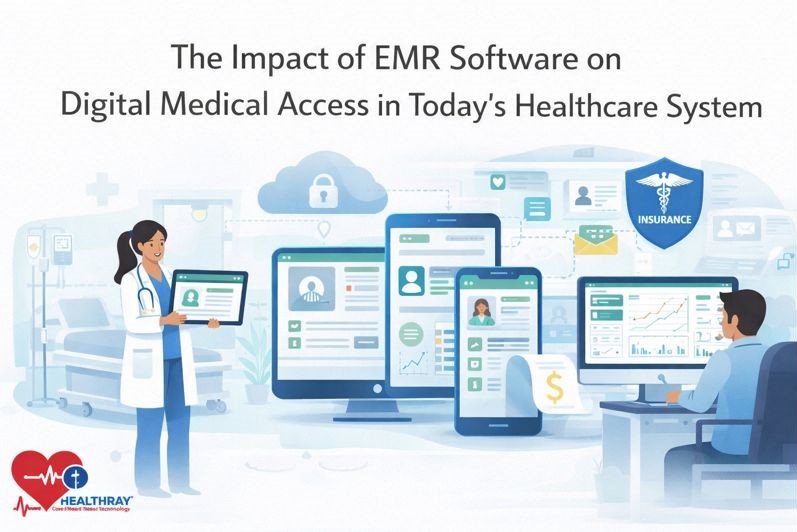
The healthcare environment is rapidly becoming digitalized. EMR software is one of the greatest impetuses of this shift and it has essentially changed the approach to medical information creation, storage, access, and sharing. With the emergence of digital medical accessibility becoming a fundamental requirement on both sides of the healthcare profession, EMR systems have become instrumental in enhancing care efficiency, transparency, and continuity throughout the healthcare sector.
This paper discusses the meaning of EMR software, the role it plays in allowing digital access to medicine and the reason why it has become an essential element of contemporary healthcare software systems across the globe.
Understanding EMR Software in Modern Healthcare
Before getting into its effects, then it is necessary to first answer a simple question; what is EMR software?
EMRS Software is an electronic system of the medical chart of a patient. It is also full of clinical information about the patient history, diagnoses, medication, lab results and treatment plans and visit notes. In comparison with the conventional records, EMR software enables authorized medical practitioners to retrieve information about patients in real-time, and safely.
The presence of an EMR system hospital setup is the digital building block of clinical operations as it guarantees that medical data is correct, current, and readily accessible. Such a direct access to information is what digital medical access is based on in the modern healthcare system.
Read: How to Maintain a Healthy Lawn While Preventing Insect Infestations
The Rise of Digital Medical Access
Digital medical access is the capability of a patient and a health worker to access medical information using electronic methods, everywhere, and 24 hours a day. This involves internet access to health records, test outcomes, prescriptions, appointment and follow up services.
The need to access digital medical has increased tremendously because of:
- Raising patient demands of transparency.
- Telemedicine and remote care growth.
- Clinical decision-making must be quicker.
- Data-driven healthcare growth.
EMR systems make this access possible through the electronic digitization of medical processes and removal of reliance on physical records, which makes healthcare delivery more connected and responsive.
How EMR Systems Improve Digital Medical Access
Centralized Patient Data
Centralized data management has been cited as one of the greatest benefits of EMR software. The complete details concerning patients are kept in one secure system holding all the information which is easily accessible by the doctors, nurses and the administrative staff.
This centralized access:
- Lessens test repetition.
- Minimizes medical errors
- Ensures continuity of care
- Time-saving to the provider and patient.
Within an EMR system hospital setting, clinicians do not have to browse through paper records or wait until records are transferred.
Real-Time Information Availability
Medical access via the digital is a matter of real-time data. The EMR software solutions platforms have an instant update facility, and all healthcare professionals access the latest information about the patient.
This real time access enhances:
- Emergency care response
- Treatment accuracy
- Medication management
- Intra-departmental coordination.
This is much needed in complex healthcare environments where decisions are to be realized within a short time.
Enhanced Patient Engagement
The current EMR applications embrace the use of patient portals capable of enabling individuals to:
- View medical records
- Download lab reports
- Track treatment progress
- Interact with medical staff.
Such high transparency will enable the patients to be active participants in their health care process. E-medical access enhances the level of trust and general patient satisfaction.
Role of EMR Software in Healthcare Efficiency
Staffing, workload, and rising operation costs are some of the bottlenecks that have been experienced in the healthcare industry.
Reduced Administrative Workload
Paper records are very time-consuming in medical institutions. Electronic Medical Records Software automates:
- Patient registration
- Clinical documentation
- Billing and coding support
- Report generation
This will enable the healthcare professionals to have more time addressing patients and not filling out forms.
Improved Care Coordination
The management of care is necessary, particularly when it concerns patients with chronic illnesses or specialists. EMR software can facilitate the smooth exchange of data among the departments, so that all the involved providers can be familiar with the similar information.
This interdependent strategy enhances better clinical outcomes and minimizes the waste of time in care provision.
EMR Software and Data Security
Along with digital access comes the obligation of safeguarding sensitive patient data. Most popular EMR software vendors create systems that are highly secure with some of the features that include:
- Role-based access controls
- Data encryption
- Audit trails
- Secure cloud storage
Such protections will guarantee that the healthcare standards are met and confidence in the digital medical access systems is developed.
EMR Software in India: Accelerating Digital Healthcare
In India, the rate of adoption of EMR software has increased in recent years. This transformation has been enabled by the government programs, growing digital literacy, and the growth in the healthcare infrastructure.
EMR systems are assisting in India:
- Hospitals are efficient in handling huge numbers of patients.
- Clinics move away to paper-based workflow.
- Access to records is enhanced in rural healthcare centers.
- Clinicians are in line with digital health objectives in the country.
EMR software in India is emerging as a pillar of sustainable and scalable healthcare delivery as the world of digital healthcare grows and develops.
Choosing the Best EMR Software
The choice of the optimal EMR software will be determined by the operational, size, and specialty requirements of a healthcare organization. Although features can be different, useful EMR software programs usually consist of:
- User-friendly interfaces
- Customizable templates
- Forces the integration with other healthcare software.
- Reliable customer support
- Ability to expand in the future.
Health care organizations ought to review solutions meticulously to be sure that they do not go against clinical and administrative needs.
EMR Software Companies and Innovation
The major EMR software manufacturers have remained innovative and are adding superior technologies which include:
- Artificial intelligence
- Data analytics
- Mobile access
- Cloud-based platforms
These innovations also improve access to digital medicine because they allow providing predictive insights, faster diagnostics, and more personalized care to patients.
Impact on the Broader Healthcare Industry
EMR software does not affect only specific hospitals and clinics. In the healthcare sector, EMRs have been adopted with:
- Better standardization of data.
- Assisted population health management.
- Enhanced health analytics and study.
- Enhanced reporting of public health.
Healthcare software systems such as EMR systems are changing the scale of care delivery by increasing the accessibility and effectiveness of medical data.
The Future of Digital Medical Access with EMR Systems
With the increasing changes in healthcare, the presence of EMR systems will equally increase. The developments in the future will be dedicated to:
- Increased inter-system interoperability.
- Improved patient-centered characteristics.
- Wearable health devices integration.
- Complex analytics of preventive care.
Such developments will reinforce more digital medical access and establish a more interconnected healthcare ecosystem.
Conclusion
The effects of EMR software on online access to medicine in the current healthcare system are immense. EMR systems have evolved into a key pillar in contemporary healthcare provision by enhancing efficiency, medical record accessibility, empowering patients, and bettering the quality of the healthcare service provision.
Since enhancing clinical processes to sustaining national digital health programs, Electronic Medical Records Software is staying the course to transform access and care delivery. The eventual transition of the healthcare sector into a more digital future will still make the proper EMR program solution an important decision to make in providing high-quality, accessible, and patient-centered care.
Author’s Bio:
Hello, I am Krupa Ghevariya, an SEO Executive at Healthray Technologies Pvt. Ltd. At Healthray, we specialize in innovative healthcare software solutions, and Laboratory Information Management System. Let’s elevate your brand together!