
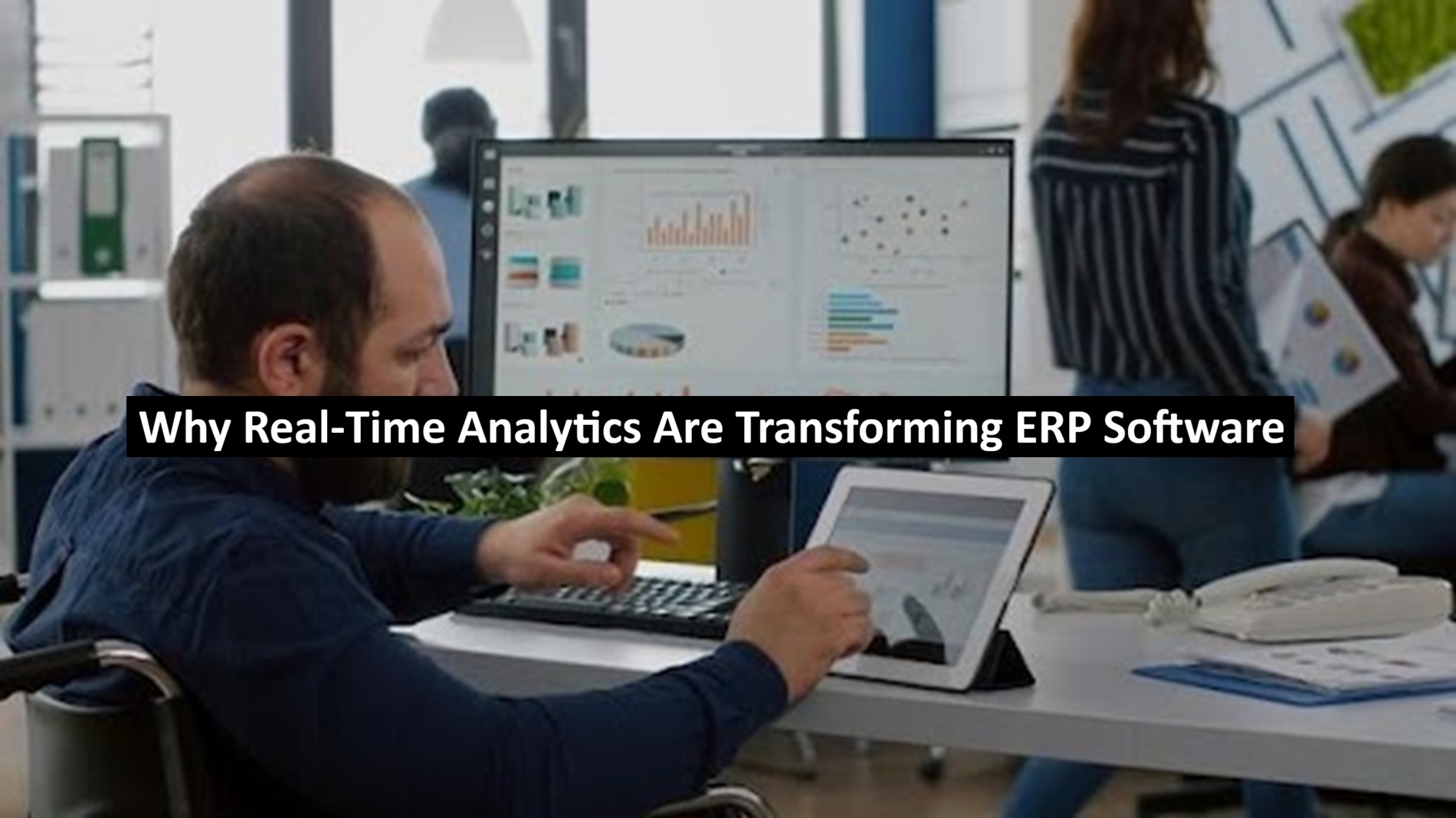
In this competitive environment, where rapid change is common, organizations want access to real-time data to keep their competitive edge. Relying on static data based on historic reports is not a pragmatic business solution, particularly when it comes to quick responses to changing conditions. ERP software solutions enhanced by the power of real-time reporting can help make an impact on organizations.
New ERP Software- all in one. ERP Software. ERP has gone beyond the role of a tool for maintaining business processes. It has become a central hub for a business decision support system that offers live business performance through sales, manufacturing, customer service, finance, and inventory departments. Through this visibility into the processes, it helps businesses to boost overall operational performance, lower down their operational expenses, and enhance their business processes for smart decision making.
What Are Real-Time Analytics in ERP Software?
Data generated within your business is collected, processed, and delivered through the ERP Software in real time. Rather than a 24-hour-a-day / 7-days-a-week delay before information gets to those making the big calls, ERP software enables users to watch over live dashboard reporting.
Instead, in real time you can see what’s happening in the company that is changing immediately, including how to react. Managers are watching Sales performance, Inventory usage, production, as well as financial performance all without waiting a day, a week or even longer to see the information. This allows organizations to be quicker in identifying problems and recognizing new opportunities.
Why Businesses Need Real-Time ERP Analytics
Your world has become more dynamic as time goes on. Customers’ expectations just keep growing; there are supply chain interruptions at an increased pace; market conditions change at a flip. With historical data reports you’ll find yourselves missing opportunities.
With Real-Time ERP, a real-time overview into all ERP aspects to allow ERP Software to offer real-time information for quick decision making is presented to the company owner. From real-time alerts on inventory levels on products to sales trends, from productivity issues, to how our products are manufactured etc. You will have a picture of what the entire company’s status and have real-time decision based upon.
Key Benefits of Real-Time Analytics in ERP Software
Faster Decision-Making
It’s hard to imagine life before real-time access of business intelligence, but many modern ERP software solutions provide it readily. No longer must CEOs and managers depend on labor-intensive, pre-programmed reports – Interactive dashboards allow businesses to monitor key performance metrics in real time.
Improved Operational Efficiency
Businesses monitor workflows across various departments with the help of real-time analytics. Businesses can thus improve their process by removing bottlenecks and eliminating operational inefficiencies. The team will end up working much more Productively and the operational cost of your Business will come down.
Better Financial Management
Business Growth Demands Financial Visibility Your ERP Software should be equipped with real-time analytics capabilities that keep an eye on your cash flow, revenue, expenses, and profitability always. Finance department staff can produce precise reports, identify odd expenses, and take financial choices using up-to-date data.
Smarter Inventory Management
With the ability to make decisions in real time thanks to live data, inventory management is greatly simplified. This allows businesses to watch their stock levels, eliminate excess inventory, and avoid any stockouts. Through an automated warning, the procurement team is able to restock products as stock is reaching an all-time low, therefore ensuring there’s no interruption in their activities.
Enhanced Customer Experience
The key to successful customer service is speed and precision. Your customer service agents will be armed with immediate, accurate, and real-time access to order status, inventory, and shipping. To better serve customers and ensure higher levels of customer satisfaction. Real-time ERP Software puts this information in the right hands at the right time.
Predictive Analytics and Forecasting
Contemporary solutions, particularly some ERP implementations, integrate real-time analytics with artificial intelligence. These can include forecasting sales, predicting customer demands, and identifying the risks, as it evaluates real-time business information. Such analyses can enable businesses to plan and perform more effectively in the long term.
Industries Benefiting from Real-Time ERP Software
Businesses of all sizes are taking real-time analysis and using it in all of their different departments.
Manufacturers use ERP software to provide live tracking of production lines, machines, and quality control. Retail companies have real-time views of stock and customer sales patterns, helping them maintain the correct inventory levels. Healthcare companies track patients and resources better by having immediate access to information. The same real-time insights help logistics track shipments and deliveries, while also giving financial institutions the power to detect compliance and fraud more effectively.
Organizations are getting better and faster decisions in their industries, gaining a stronger grasp of how they operate
Features to Look for in ERP Software
You’ll want to ensure that the ERP Software you are using the support you need to gain the best benefit from real-time analytics. The right ERP solution can incorporate many or all the following key features:
- Live dashboards and customizable reports
- Real-time KPI monitoring
- Mobile accessibility
- AI-powered recommendations
- Predictive analytics
- Business intelligence (BI) integration
- Automated alerts and notifications
- Cloud-based deployment
- Secure data management
- Easy integration with existing business systems
This allows businesses to obtain valuable insights, whilst promoting department-to-department work.
Challenges of Implementing Real-Time ERP Analytics
The upsides can be far-reaching, but in terms of actual implementation, some organizations could struggle to achieve them. The reasons are varied and include inferior data, reliance on older systems, integration difficulties, and workforce reluctance. In such instances, the key factors in gaining traction with real-time analytics will be clean data, cloud-based, scalability solutions such as ERP Software, and workforce education. And of course, security must never slip, given that a real-time analytics setup can be a magnet for proprietary data.
The Future of ERP Software
Future trends for ERP Software will certainly integrate future technologies like the Internet of Things, IoT, the cloud, big data and the advent of predictive analysis, a branch of computer science used to make predictions. Machine learning and the Internet of Things will continue to influence the ERP Software industry; AI and ML technology are enabling ERPs to become much smarter as they can automate manual operations, predict with more precision and develop a more comprehensive vision of the enterprise.
The trend towards cloud-based ERP platforms will continue to grow in business, searching for flexibility, affordability, and the capacity to develop as companies expand. Moreover, employee empowerment is the keyword, with employees needing self-service and intelligent dashboards which offer the insights they must assist in making informed choices with minimal IT reliance.
Conclusion
Real-Time ERP Solutions are a Game Changer For businesses to stay competitive in the present market, ERP software has become indispensable as not just a software for managing business operations, but a platform to empower with intelligent business decisions through Real-time Analytics ERP software that provides business leaders immediate and relevant insights on a wide range of metrics to enhance operational efficiency, streamline financial operations and aid with predictive analysis of business functions.
The organizations that leverage real-time analytical abilities by implementing the ERP software benefit with quick and right decision-making processes, enhanced customer service as well as an efficient visibility across their operations. The increasing pace of digital transformation mandates businesses will have to take up the intelligent ERP systems for sustained growth.
Author’s Bio:
Saif Shaikh is a Content Strategist at SaaSCounter, where he creates engaging and informative content for a wide range of websites. He helps businesses strengthen their online presence and connect with their target audience.