
In the modern digital age, Content Marketing and SEO are no longer a luxury; they are a must-have for any serious marketing strategy. Together, they can boost the visibility of your brand, bring in more and more qualified leads, and help your brand grow.
Content Marketing is essentially about providing value through engaging, relevant content that directly addresses your audience’s needs. On the other hand, SEO is the art of optimizing content so that search engines will rank it so well that potential customers can easily find you.
While each of these two strategies is essential, they are much more powerful together. But what about the importance behind these techniques? According to recent data, 91% of all B2B marketers use content marketing as a key piece of their business plan.
In this blog, we’ll go over how Content Marketing and SEO work together and how you can use them both effectively. We’re going to dig into how you can leverage both to increase your brand and grow your business.
1. Content Marketing: The Foundation
Content Marketing is at the heart of any successful marketing strategy, a powerful way to build trust and create long-term relationships with your audience. Content marketing differs from traditional advertising because it attracts and engages consumers through providing valuable, relevant information drawn from your target audience’s needs and interests.
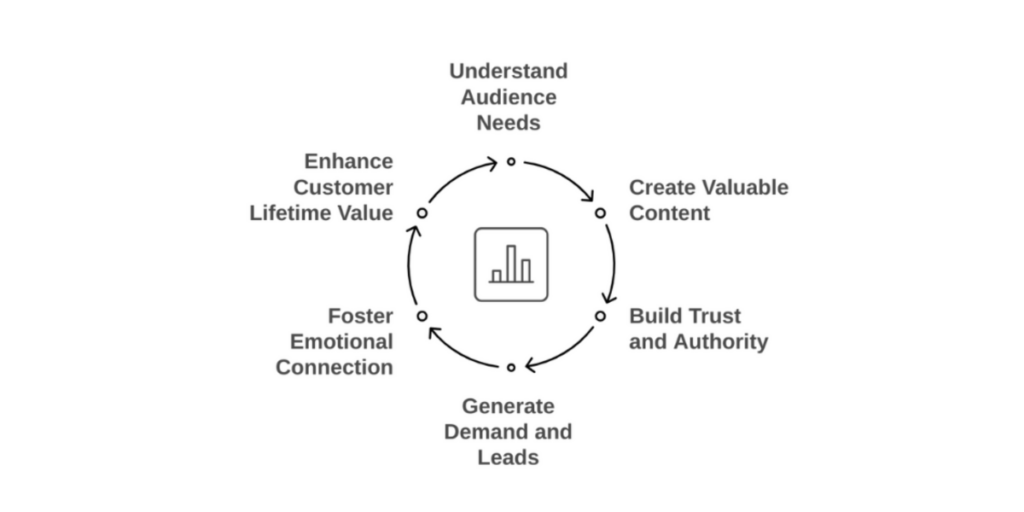
When content marketing speaks directly to the pain points and goals of your audience, it thrives. If you can successfully address these needs, you make yourself less of just a service provider but a trusted authority within your industry. In order to achieve this, you need to understand your buyer personas in depth. These are your ideal customers’ unique characteristics, challenges and preferences represented in these personas. One way to get your message to resonate and engage at a deeper level is to craft the content that directly speaks to them.
HubSpot’s blog is one of the best examples, establishing authority and building a loyal following can be done through consistent, valuable content. It’s not just that HubSpot has created a massive readership by offering practical resources for marketers, it’s also created trust and respect in the industry. This is not about driving traffic; this is about relationship building, turning casual visitors into long-term advocates.
Consider this: Content marketing is directly responsible for generating demand or leads for 60% of marketers. And this statistic calls to mind that content is such a key factor in delivering real results, whether that’s generating qualified leads or turning prospects into customers. Content marketing is also another primary way businesses continue to build relationships. It’s not about just pulling people in, it’s about building loyalty. We know that customers who are emotionally connected are 52% more valuable than simply satisfied customers. If the content makes an emotional impact on your audience, it creates stronger bonds and higher retention rates, and therefore better customer lifetime value.
2. SEO: Driving Visibility and Growth
Now that we’ve covered how Content Marketing builds trust and engages people, we’ll dive into SEO, the powerhouse that makes sure your content reaches the right audience. Today, having valuable content is only half the fight. The best content won’t be seen without the right SEO strategy. With SEO, content gets seen, drives more traffic, and makes a real difference to your business growth.
Read: 8 Signs Your Workflow Needs Smarter Automation Tools
Improving Search Visibility & Driving Organic Traffic
Search engine optimization (SEO) is the art and science of making your website and content work better in search engine results. It’s really about finding a way to get your content in front of the right people at the right time. With a strong SEO strategy, your site becomes more visible and eventually attracts more qualified traffic, more opportunities and more conversions.
Keyword research is at the heart of SEO. This is where you begin to surface terms and phrases people are searching for now in order to craft content to answer those queries. This makes your content findable and relevant. Even with high-quality content, if it is not targeted with proper keywords, you risk it falling into the digital void.
SEO is not limited to keywords only. It’s also about the structure and performance of your site. The key here is on page optimization making sure your web pages are formatted and coded in such a way that search engines can easily crawl, index and rank them. You are just helping search engines get to understand and classify your content by focusing on things like title tags, meta descriptions, and header tags. Titles and meta descriptions work perfectly in helping Google understand relevance, but also in grabbing clicks from users.
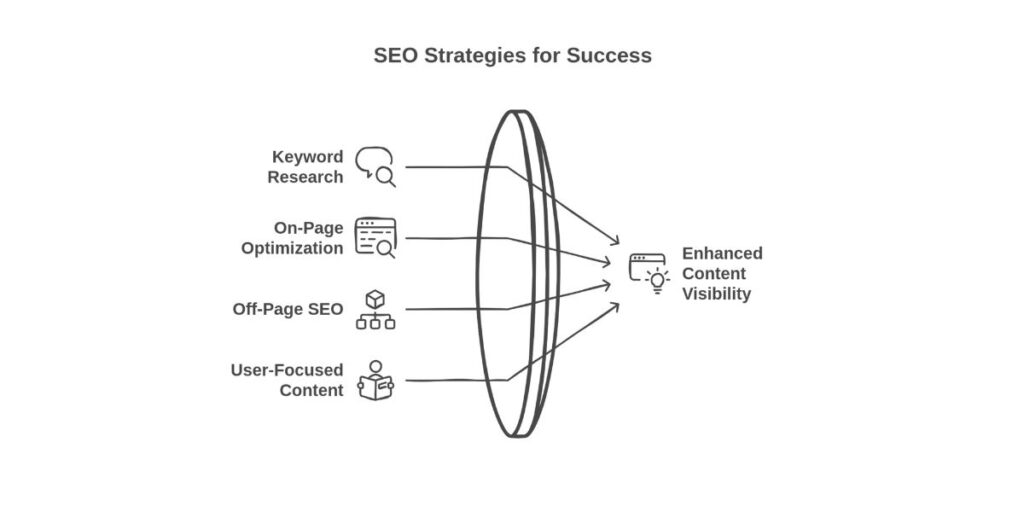
But great content and on-page optimization are not the whole picture. Off-page SEO, such as acquiring backlinks from high authority sites, helps amplify your content’s reach. These backlinks are a strong signal to search engines that your content is worth sharing and is therefore credible. Traffic and more backlinks are also driven by social media signals that increase your content’s authority. As an integral part of SEO, the algorithms are not everything; it’s about people. Google’s search algorithms are constantly updated to favor high-quality user-focused content. The goal of Google is to give the best, most relevant, useful and engaging content to its users. These pages are rewarded with higher rankings.
Take SEMrush, for example. Being one of the top SEO tool providers, SEMrush has been ranked for a number of keywords by continuing to create content that answers users’ questions and serves their needs. They do a lot of things through strong SEO practices that drive a lot of organic traffic, which is always a testament that strong SEO can work if you have quality content.
The numbers speak for themselves: According to research, 75% of people never scroll past the first page of search results. Without your content, most of your potential visitors won’t see it. If you’re not doing SEO, your content might exist, but it won’t have the visibility it deserves.
3. SEO’s Benefits for Content
SEO is much more than a way to drive traffic. It’s a strategic lever for increasing the performance and reach of your content. When used the right way, SEO can do wonders for your content, giving it visibility but life beyond that. We’ll look at how SEO helps content marketing success.
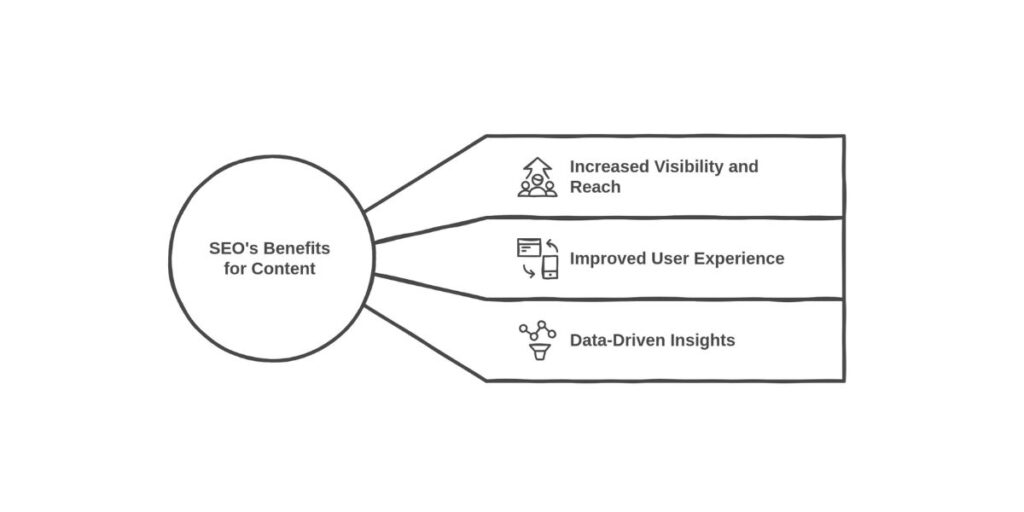
i. Increased Visibility and Reach
The whole purpose of SEO is to make your content more discoverable. No matter how insightful or valuable the content, if you’re not showing it to your target audience, your content won’t work. SEO is about ensuring that your content will be found by those searching for solutions to their problems.
The more your content ranks higher in search engine results, the more exposure you receive. SEO is crucial so that content doesn’t get overlooked, and research shows that content appearing on the first page of search results makes up the majority of traffic.SEO isn’t just about being ranked high; it’s also about attracting the right traffic. With search engine optimization, you can focus on potential customers who already have an interest in what you’re offering, which means you’ll get qualified leads and potential customers to read your content.
But where SEO comes in is that it ensures your content reaches a good percentage of your audience, 68% of online experiences start with a search engine. If your content is on the second or third page, it’s as invisible to most users as it gets. For modern businesses, that means SEO is essential for guaranteeing your content has the opportunity to connect with and resonate with the people who need it most.
ii. Improved User Experience
SEO is often thought of as a tool to help increase search rankings, but that’s not all. An SEO strategy well executed does improve the user experience on your site. SEO is all about making sure that these elements that matter to both search engines and to users are optimized, i.e., from fast load times to mobile-friendly designs.
For example, page speed is important because if your page doesn’t load fast enough, the users will bounce before they can even read your content. Fast loading pages mean visitors spend more time on your site, are more likely to interact with your content and convert. SEO is also something that needs to be mobile-optimized. With Google’s mobile-first indexing, your website’s performance on mobile devices is what matters most when it comes to its search result ranking. A mobile-optimized website is not a nice-to-have anymore; it’s a must.
Additionally, SEO aids in website organization. Optimizing for search engines makes your website a better experience for your users. If users can easily find what they’re looking for, they’re more likely to stay on your site, engage with your content and take action (sign up for a newsletter or make a purchase).
4. Data-Driven Insights
SEO offers one of the most powerful data-driven insights to optimize both your content and your overall strategy. SEO is not only about improving ranks, but about using data to learn what works and what doesn’t work with your content.
For instance, with SEO, you can monitor the keywords that attracted traffic to your content. This data is so valuable because it not only tells you what people are searching for, but also what topics your audience responds to most. Now you have an insight to adjust your content strategy according to what your audience is interested in and thus, your content becomes more relevant and impactful.
Marketing strategies that are data-driven are winning. 78% of Marketers using data to drive their content make better conversions and achieve better business results. SEO tools also give you visibility into where your traffic is coming from – organic search, referrals, or social media. That allows you to test different channels and scale up what’s working. User behavior metrics like time spent on page and bounce rate are also huge feedback on how users are interacting with your content. If you have high bounce rates, it may suggest your content isn’t what your audience wants. By analyzing these metrics, you can see what is working or not and continue to get better and better at how you make content.
5. Beyond SEO: Enhancing User Experience
SEO is important to bring traffic, but the user experience is what ultimately decides if that traffic converts. The secret sauce to this experience is web personalization, and, in turn, SEO performance. Personalization helps increase user engagement, reduce bounce rates, and increase conversion rates, all factors that search engines value.
The Power of Web Personalization in Boosting SEO
Data is the key to web personalization: bringing visitors exactly the highly relevant, targeted content that they want. Not only does this keep people engaged, but it also tells search engines that your site is valuable to people, which makes you rank higher. Keeping your users engaged means personalizing content, for instance, business case studies tailored to your customers’ industry or product recommendations based on the pages they visit – which also works better for SEO. The websites that keep users engaged on their sites will be rewarded by search engines and personalized content can help improve your site’s visibility in search results.
In particular, when a SaaS business customizes the content on their homepage by presenting content depending upon the interests and requirements of various visitors, then this aids in improving user experience as well as encouraging further visits. The result? Better organic rankings by improving user interaction and also stronger SEO signals.
When paired with a conversion rate optimization platform, personalization not only improves engagement but also directly impacts how effectively visitors are guided toward desired actions.
Engagement and Conversions
Personalization is related to user engagement. Personalization has been proven to help increase conversion rates by 15%. For users, content that addresses their interests and needs keeps them focused longer, engaged more and increases the chance of converting.
By giving personal experiences, businesses can improve user satisfaction and SEO friendly metrics such as lower bounce rate, more time on site, etc. And these are the exact things search engines look for when deciding on content quality and how to rank websites.
Case Study: Netflix
Web personalization is an excellent example of customer experience improvement and SEO performance by Netflix. Through some really sophisticated algorithms, the platform recommends content tailored to individual viewers based on some of their watch history, ratings, and whether they’ve looked at something similar. One of the biggest attractions of having a personalized experience is that it keeps your users engaged for longer, and retention rates are better, indicating to the search engines that your site is supplying relevant user-centric content.
For example, when you log in to Netflix, the homepage adjusts to your preferences, displaying titles which fit with your viewing habits or genres you’ve already watched. Not only will this increase the amount of time you spend on the platform, but it’ll also improve interaction and content on the site, which is essential for SEO ranking. Additionally, Netflix’s reliance on AI to predict user preferences and offer custom recommendations offers great engagement, which Google has always valued. The longer users spent interacting with the content, the stronger the SEO signals Netflix would receive and the higher their rankings and watchability in search results would be.
Simply, by combining the powers of personalization with search optimization, Netflix delivers an optimized, user-centric search environment that generates organic traffic and brings its best user engagement and inculcates overall search performance.
6. SEO and Content: A Winning Combo
Let’s be clear: SEO and content are not two different tactics to choose from, they’re one and the same. SEO is the engine, and that content is the fuel. Likely, your digital marketing won’t live up to your expectations if you don’t have both. But it’s essential to understand that great content creation is only the first step. Without optimization, your content simply cannot have the visibility it needs to perform.
Just putting a few keywords in your content will no longer work. SEO is an ever-evolving process wherein you work constantly to improve your content’s ability to be seen and ranked well. Given that your content will be viewed by those actually searching for it, you’ll be reaching an audience that is already interested in what you do.
Now, here’s the truth: In the case of SEO and content alignment, you’re not just driving traffic. You’re driving qualified traffic. The idea isn’t to try to get any visitors, it’s to get the right visitors. That’s why this means your content should not only rank high but deeply resonate with your target audience, which in turn means opportunities to engage and convert.
When people think of SEO, they often think of ranking higher, but remember, optimizing content isn’t about simply ranking higher; it is about making sure that content is answering the right questions for your audience. When your content is more relevant and more interesting to your target audience, the more likely you are to convert that traffic into tangible results, regardless of whether it’s leads, sales, or long-term brand loyalty.
Conclusion
Content Marketing and SEO are not distinct entities in the digital world; they are two related tactics that, when combined, amplify your brand’s reach, generate target leads, and boost your growth. SEO optimizes content for search engines, making it easier for potential customers to discover you, while Content Marketing provides them with valuable, engaging content to connect with.
By combining these two approaches, businesses can publish content that resonates with their audience and also ranks high on search engines. Great content drives engagement and conversions, SEO makes it more visible. An SEO driven content strategy is a great way to integrate your SEO efforts into your content marketing and will elevate your brand’s visibility and deliver tangible results.
Author’s Bio:
Vidhatanand is the Founder and CEO of Fragmatic, a web personalization platform for B2B businesses. He specializes in advancing AI-driven personalization and is passionate about creating technologies that help businesses deliver meaningful digital experiences.